All About Caves
How caves form, why they matter, and how we protect them.

A Cave?

Caves Found?

Form

of Caves

Show Caves

Matter
What Is a Cave?
Caves are natural underground spaces formed by geological processes over thousands—and sometimes millions—of years. Some are small chambers only a few feet long, while others extend for hundreds of miles beneath the surface.
The terms cave and cavern both describe naturally formed underground voids large enough for people to enter. Most caves in the United States form in soluble rocks such as limestone, where slightly acidic groundwater slowly dissolves the rock over time.
More than 40,000 caves have been documented in the United States, with some of the largest cave systems found in Kentucky, Tennessee, Missouri, and other karst regions. Kentucky alone is home to more than 15,000 known caves.
Caves are far more than empty underground spaces. They are unique environments that support rare wildlife, preserve evidence of past cultures and climates, store and transport groundwater, and inspire exploration and scientific discovery.
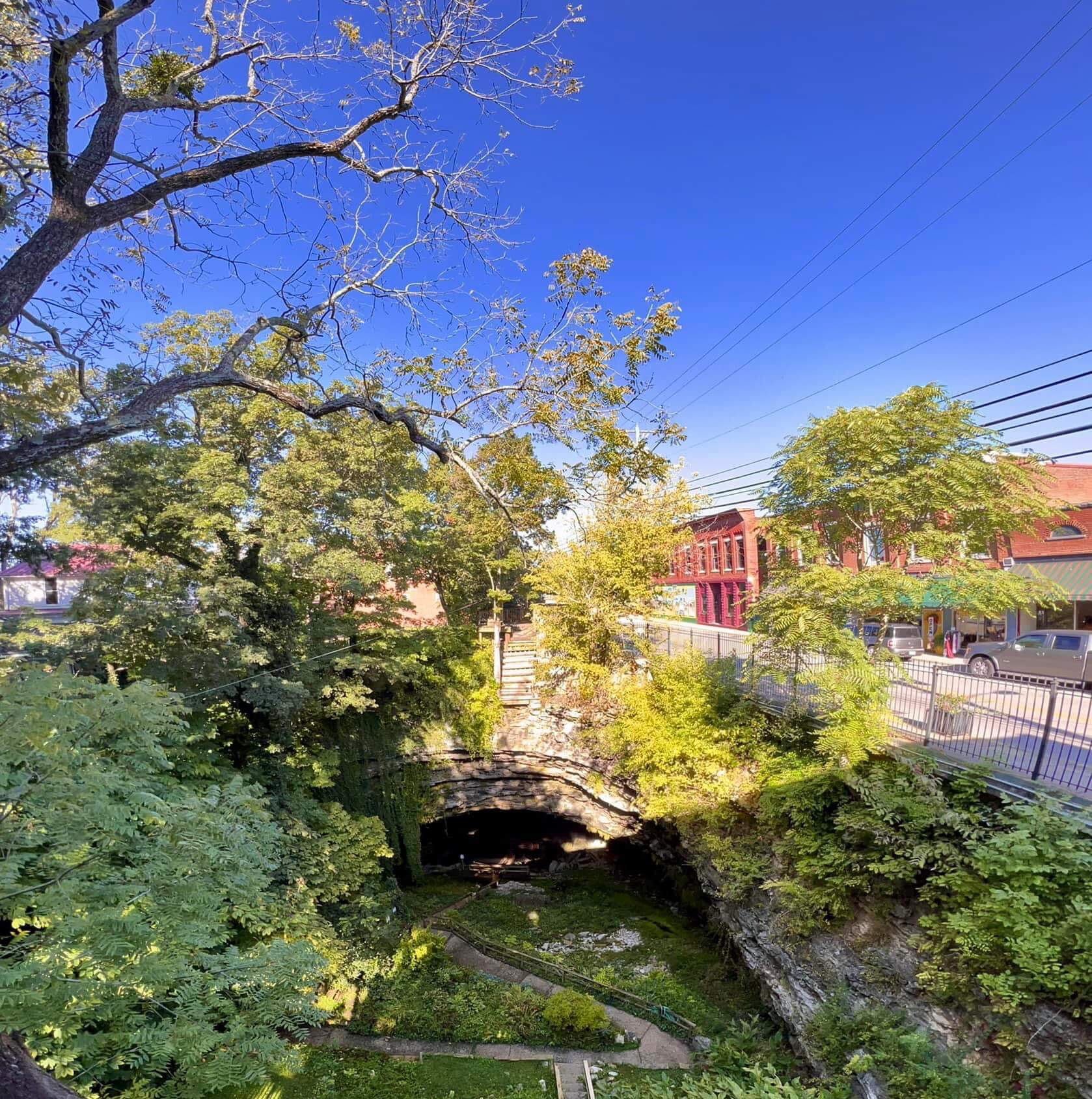
Hidden River Cave in Horse Cave, Kentucky
Where are Caves & Karst Found?
Caves are found throughout the world and can occur in many different types of rock and environments. Some form in limestone landscapes, while others develop in volcanic lava flows, coastal cliffs, glaciers, or beneath desert regions.
In the United States, caves can be found in nearly every state, but they are most common in areas with soluble rocks such as limestone, dolomite, gypsum, and marble.
Many of these caves occur in karst landscapes—areas where water has slowly dissolved rock over time, creating caves, sinkholes, springs, underground streams, and complex groundwater systems.
Scientists estimate that approximately 15–20% of Earth’s land surface contains karst landscapes or soluble rock capable of forming karst. In the United States, about 20% of the country is underlain by karst terrain that may contain caves and underground waterways.
Below is an interactive map that shows karst areas in the United States. A very special thank you to ACCA member, B.W. Szukalski for putting this together for us!
*Make sure to click on the >> to show Details and the Legend.
What is Karst?
Karst resources provide valuable drinking water supplies, habitat for rare and endangered species, important archaeological sites, and unique cave formations that may take thousands of years to develop.
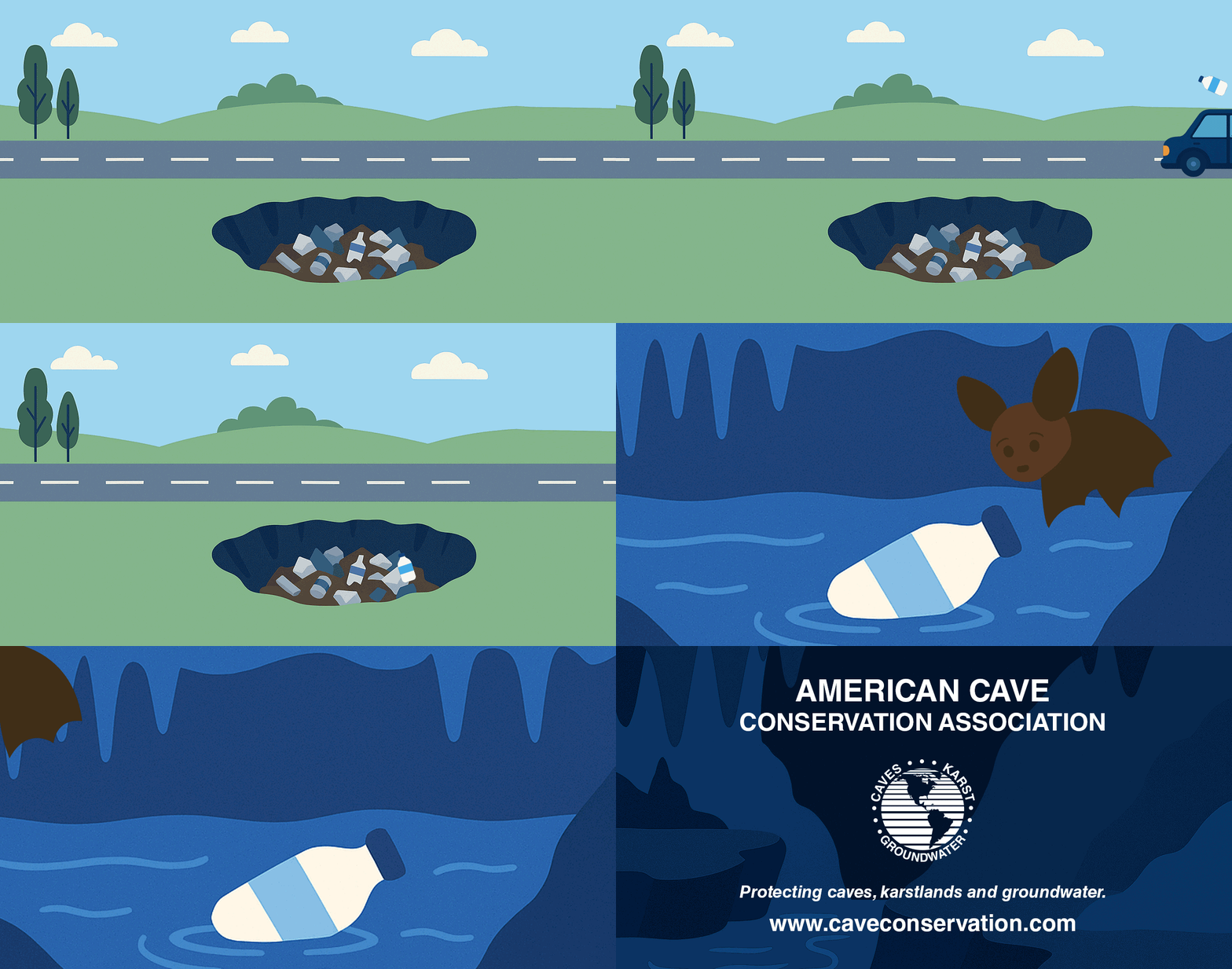
Because water can move rapidly through karst systems, pollution entering a sinkhole or groundwater supply may quickly spread to springs, streams, cave ecosystems, and drinking water sources. Human activities such as improper waste disposal, development, vandalism, and careless visitation have damaged caves and karst landscapes across the country.
The Mammoth Cave region of Kentucky is one of the world’s best-known karst areas and contains the longest cave system on Earth, with more than 400 miles of mapped passageways and new discoveries still being made today.
Because caves and karst landscapes exist largely out of sight, they are often overlooked. A major part of ACCA’s mission is helping people understand these hidden resources and the important role they play in protecting groundwater, preserving wildlife habitat, safeguarding cultural history, and maintaining healthy ecosystems.
DID YOU KNOW?
- 20% of the U.S. is karst.
- Karst supplies drinking water for millions of people.
- Many endangered species depend on cave and karst ecosystems.
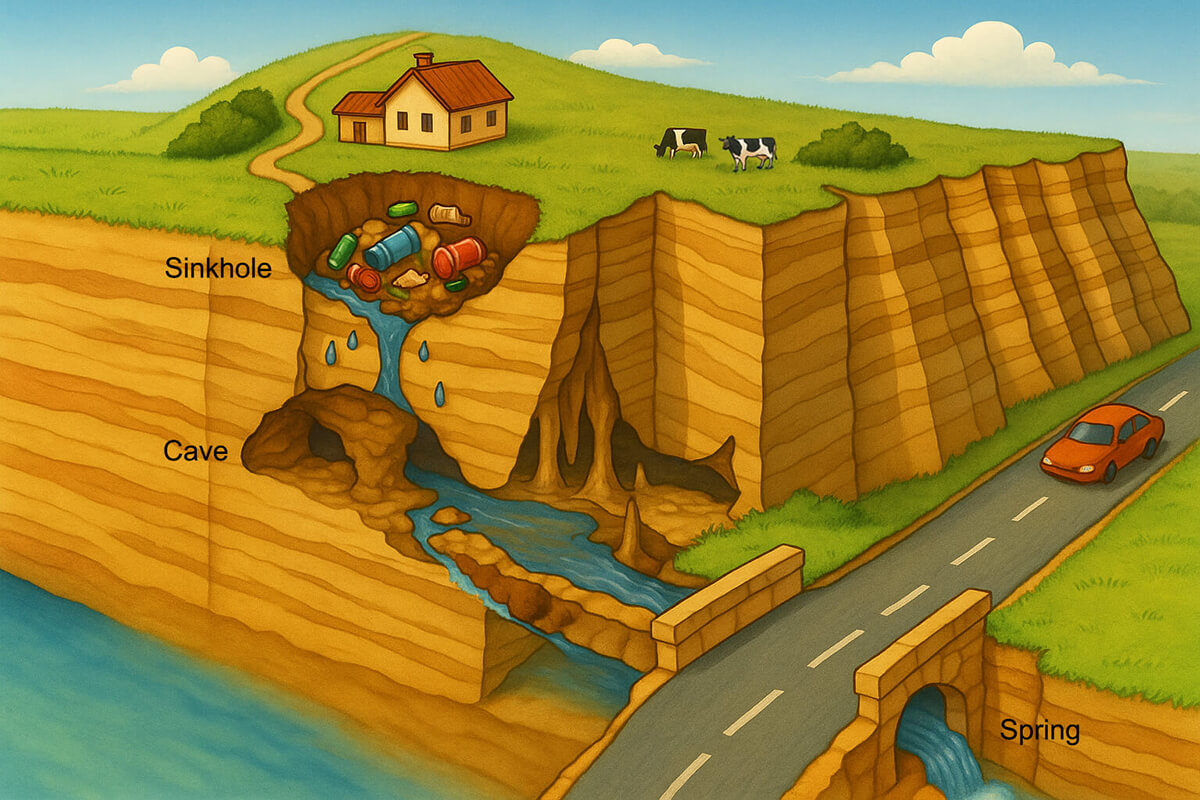
In karst regions, water can move quickly from the surface into underground streams and caves. Pollution dumped into sinkholes may travel directly into groundwater supplies used by people and wildlife.
Karst & Groundwater
Unlike many other landscapes, water in karst regions often moves rapidly through underground channels and caves. Because there is little natural filtration, pollution entering a sinkhole, sinking stream, or fractured bedrock can travel quickly through the groundwater system.
Trash, chemicals, oil, fertilizers, animal waste, and other contaminants may be carried directly into caves, springs, streams, and drinking water supplies. What happens on the surface can have a direct impact on the hidden world below.
This close connection between land, water, and caves is one of the reasons karst landscapes require careful stewardship and protection.
Learn More About Karst
Living With Karst: A Fragile Foundation is a free educational booklet published by the American Geosciences Institute (AGI) with ACCA as a publishing partner. The booklet explains how karst landscapes form, why groundwater is especially vulnerable in karst regions, and how caves, springs, wildlife, archaeology, and human activities are connected.
Click the booklet cover to download the PDF.
For more information on AGI please visit their website:
© 2001 Published by the American Geosciences Institute and used with permission.
How Caves Form
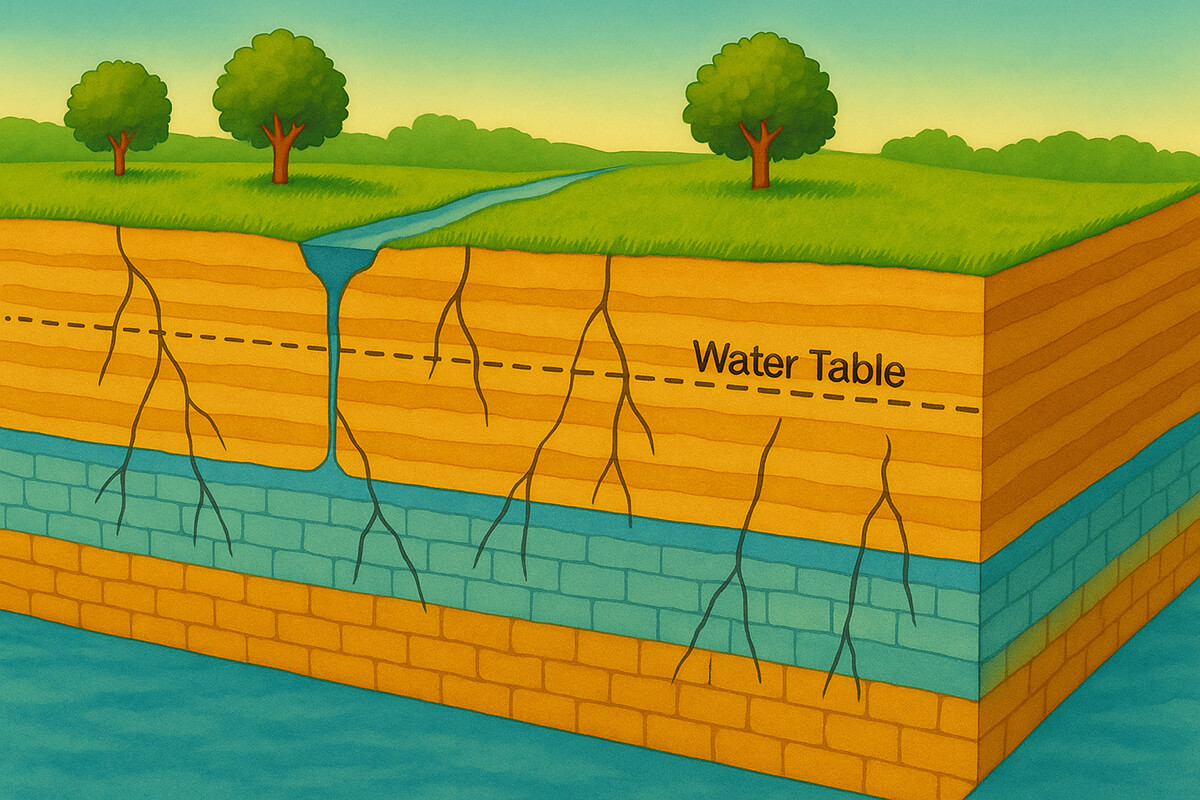
Step 1: Water Enters the Ground
Rainwater and surface streams move downward through soil and bedrock, following natural fractures and joints. As the water reaches soluble rock layers, it begins dissolving the rock along these pathways.
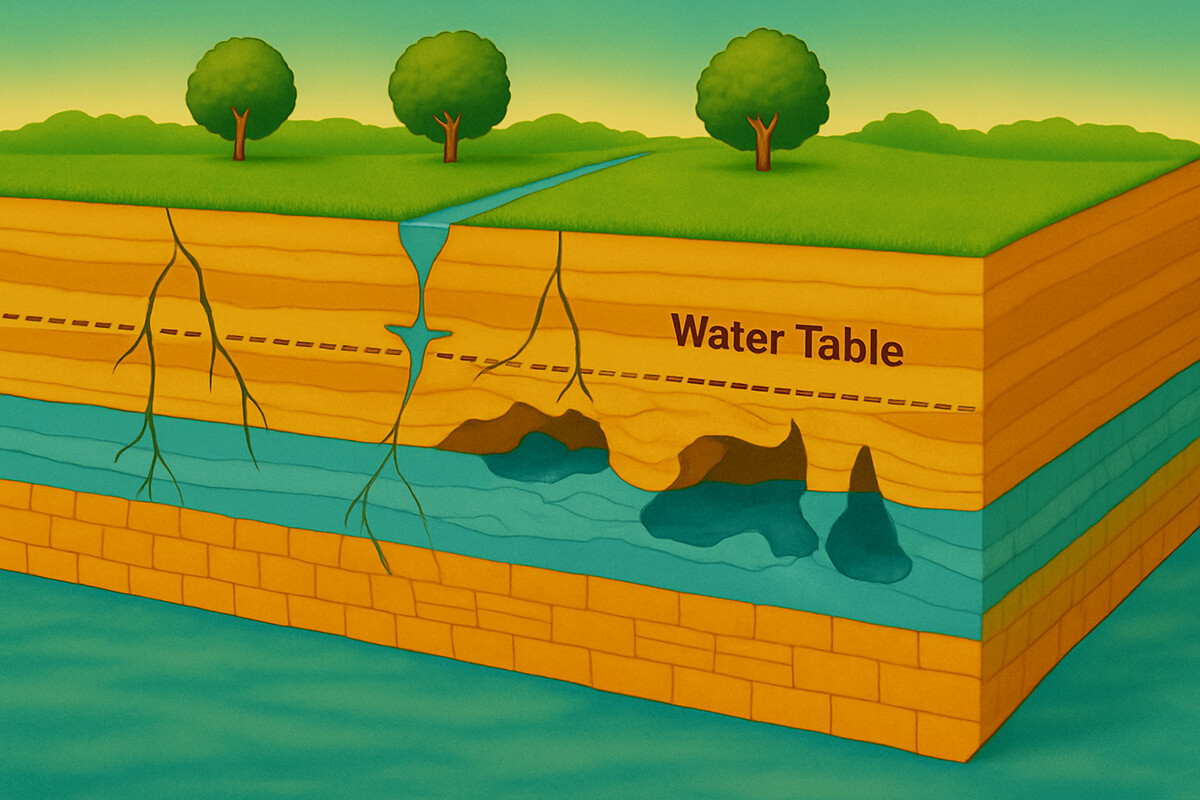
Step 2: Underground Passages Develop
Over time, small cracks become larger openings. Water continues to dissolve the rock, creating underground channels, chambers, and cave passages. These openings may grow large enough for streams to flow underground.
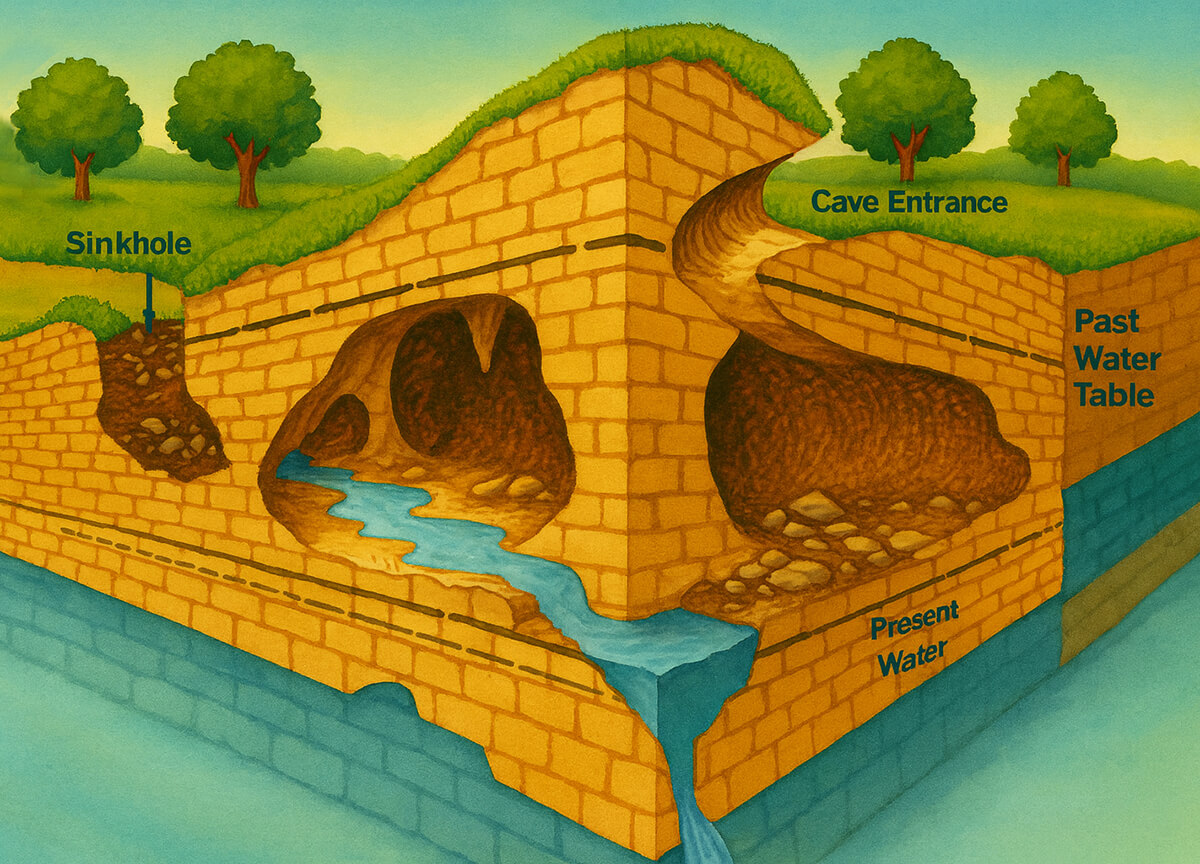
Step 3: Cave Systems Grow
As cave passages expand, entire cave systems can develop beneath the landscape. Sinkholes may form where the ground above collapses into an underground void. Underground streams, springs, and cave entrances become visible signs of the hidden processes taking place below the surface.
Some cave systems continue to grow today, while others preserve evidence of ancient water levels and past geological conditions. The Mammoth Cave region of Kentucky provides a remarkable example of this process, with hundreds of miles of interconnected passages formed by groundwater moving through limestone over millions of years.
Cave Formations (Speleothems)
Many caves contain beautiful mineral deposits known as speleothems, including stalactites, stalagmites, flowstone, columns, and draperies. These formations are made primarily of calcite, the same mineral found in limestone.
Speleothems form when slightly acidic water dissolves calcite from the rock above and carries it into the cave. As the water drips, seeps, or flows through the cave, it releases carbon dioxide and deposits tiny crystals of calcite. Over time, these crystals accumulate to create cave formations.
Growth is extremely slow—many speleothems may take hundreds or even thousands of years to develop. Their shapes depend on how water enters and moves through the cave, while their colors are influenced by minerals such as iron and manganese carried in the water.
Because they form so slowly and are easily damaged, cave formations are considered a nonrenewable resource. A single careless touch can leave oils that alter their growth, while broken formations may never fully recover.
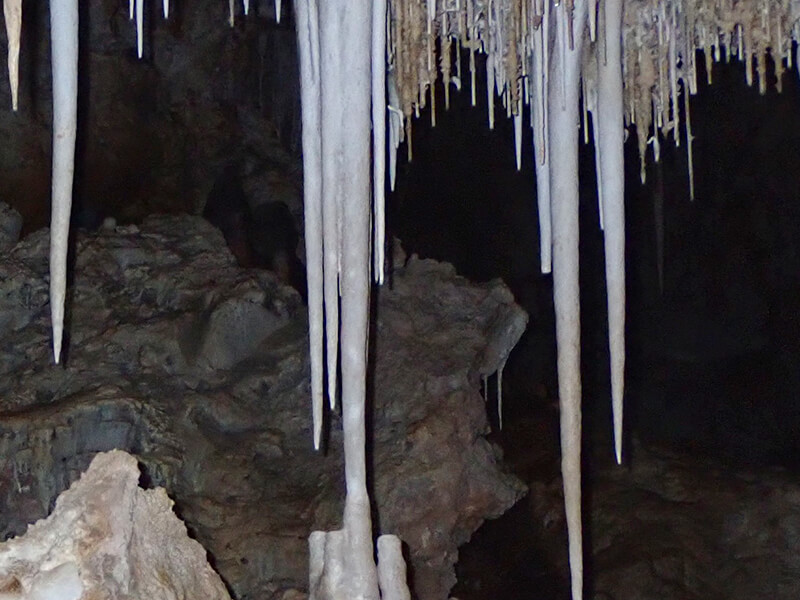
photo by Mike Mansur
Stalactite
An icicle-shaped formation that hangs from the cave ceiling. Stalactites often begin as soda straws and grow as calcite is deposited around the outside.
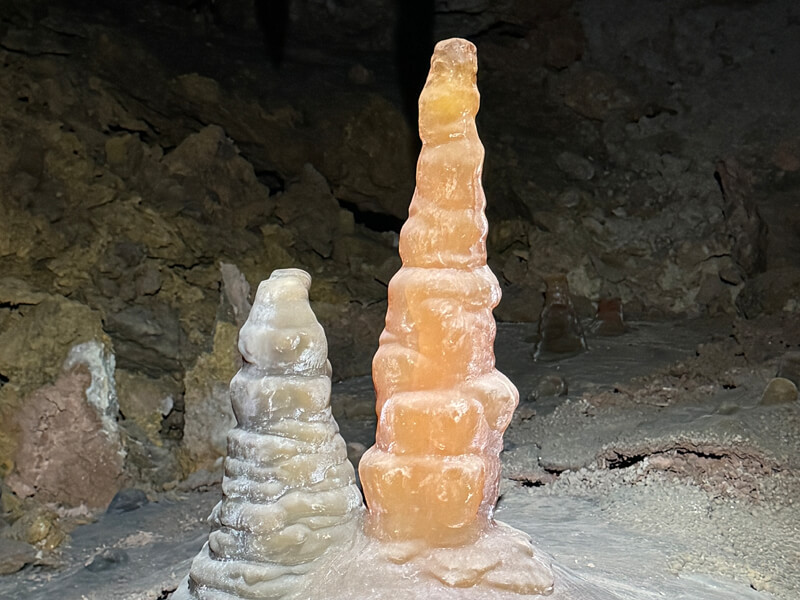
photo by Mike Mansur
Stalagmite
A formation that grows upward from the cave floor, usually from water dripping from a stalactite above.
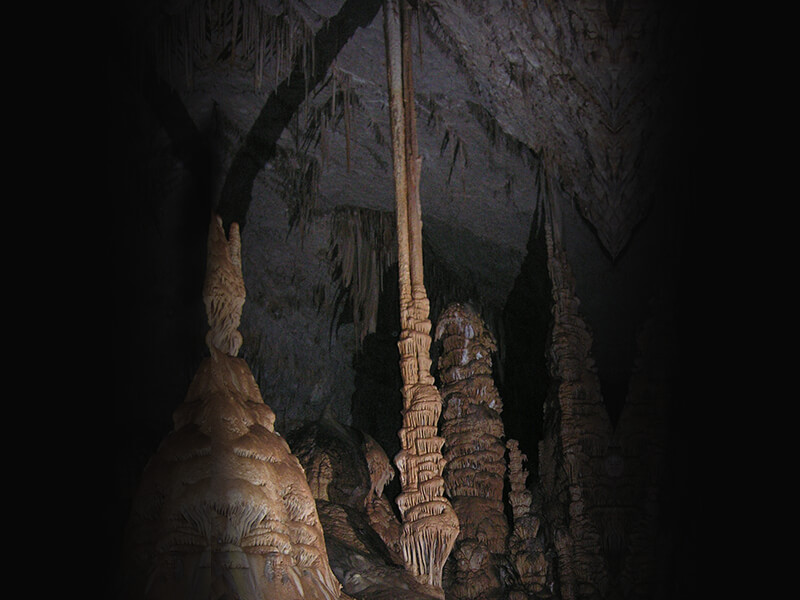
photo by Mike Mansur
Column
Forms when a stalactite and stalagmite grow together, creating a single formation that connects the ceiling and floor.
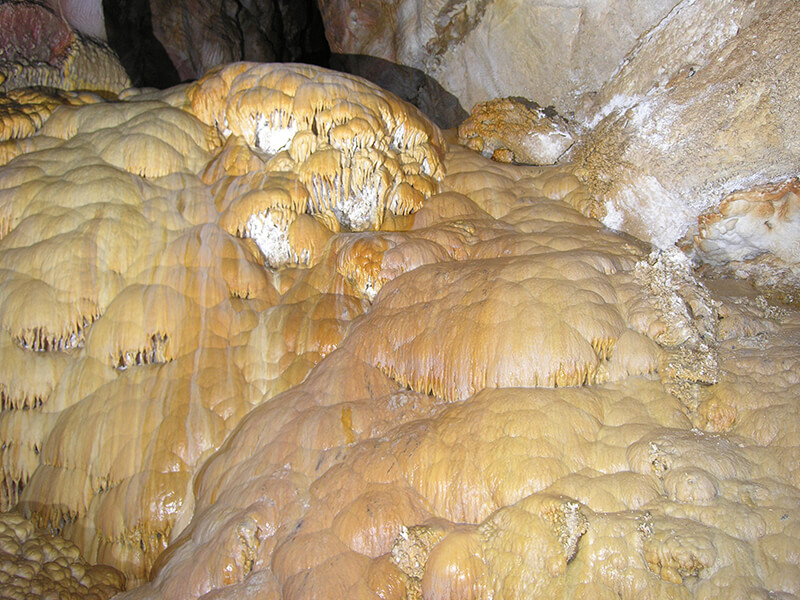
photo by Mike Mansur
Flowstone
Sheet-like deposits of calcite that form as water flows across cave walls, floors, and other formations. Flowstone often resembles a frozen waterfall.
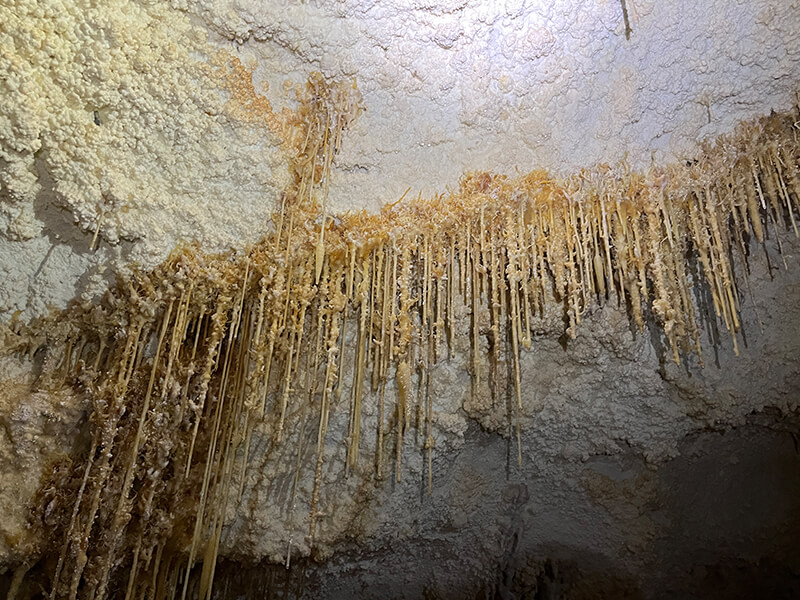
photo-by Mike Mansur
Soda Straw
A thin, hollow tube that grows from a cave ceiling as water deposits rings of calcite at its tip.
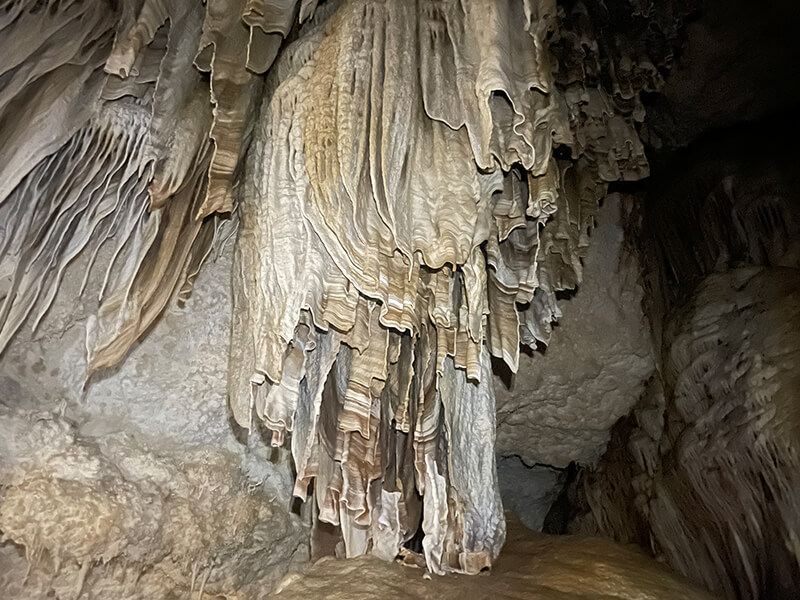
photo by Mike Mansur
Drapery (Cave Bacon)
A thin sheet of calcite that hangs in delicate folds, formed when water trickles along a sloping ceiling.
Types of Caves
Not all caves form in the same way. Different geological processes create different types of caves around the world. While scientists recognize several types of caves, the examples below represent some of the most common and widely recognized cave types. The most common caves form when slightly acidic groundwater dissolves limestone and other soluble rock over time. Mammoth Cave and Hidden River Cave are examples of solution caves.
Solution Caves
The most common caves form when slightly acidic groundwater dissolves limestone and other soluble rock over time. Mammoth Cave and Hidden River Cave are examples of solution caves.
Lava Tubes
Lava tubes form during volcanic eruptions when the outer surface of flowing lava cools and hardens while molten lava continues flowing beneath it. When the lava drains away, tunnel-like passages remain.
Sea Caves
Sea caves are carved by wave action along coastlines as water slowly erodes cracks and weak areas in rock cliffs.
Talus Caves
Talus caves form between large fallen boulders that create openings and passageways within rock piles.
Glacier Caves
Glacier caves develop within glaciers as melting water cuts passages through the ice.
Wild Caves & Show Caves
Show Caves
Show caves are caves that have been developed to allow visitors to safely experience the underground world. Features such as lighting, walkways, handrails, and guided tours help protect both visitors and the cave environment. Show caves provide valuable opportunities for education, recreation, and scientific interpretation.
Hidden River Cave, operated by the American Cave Conservation Association in Horse Cave, Kentucky, is an example of a show cave where visitors can learn about cave geology, groundwater, wildlife, and conservation through guided tours and educational programs.
Many show caves belong to the National Caves Association (NCA), a trade organization representing cave attractions across the United States. Visitors can use their website to find caves that offer public tours. Hidden River Cave is a member of the association, although not all commercial caves and cave attractions belong to the NCA.
Wild Caves
Wild caves remain largely undeveloped and retain their natural conditions. They may contain uneven terrain, low passages, underground streams, vertical drops, and other hazards. Exploring wild caves requires proper equipment, training, and respect for fragile cave resources.
Many wild caves provide important habitat for bats and other cave-adapted animals, contain sensitive archaeological resources, and preserve scientific information that may be thousands of years old.
Whether developed for tourism or left in their natural state, caves offer unique opportunities for exploration, education, recreation, and scientific discovery. Understanding the differences between wild caves and show caves helps visitors appreciate the many ways people experience and learn from the underground world.
From providing habitat for wildlife to protecting groundwater and preserving evidence of past cultures, caves play an important role in both natural and human history.
Cave Safely
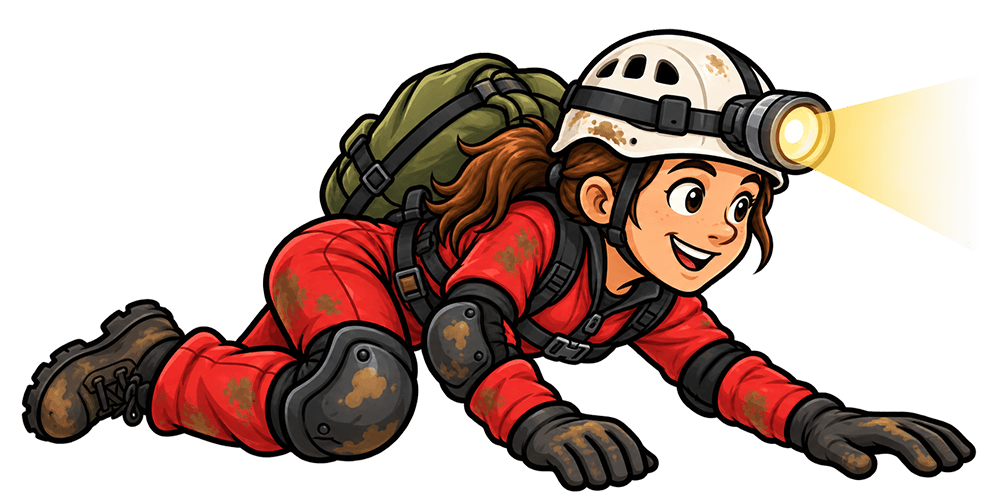
Exploring wild caves requires preparation and the right equipment. Never cave alone, and always let someone know where you are going and when you expect to return. Each person should carry at least three independent sources of light and wear appropriate clothing and protective gear, including a helmet with a headlamp, gloves, sturdy footwear, and knee pads. Carry a small pack with backup lights and batteries, water, snacks, and other essential supplies.
Conditions underground can be wet, muddy, cold, and physically demanding, so know your abilities and the difficulty of the cave before entering. Whenever possible, new cavers should explore with experienced cavers who can help them learn safe and responsible caving practices.
Why Caves Matter
Groundwater
Many communities depend on groundwater that flows through karst landscapes and cave systems. Because water can move rapidly through underground passages, pollution entering sinkholes or groundwater may spread quickly and affect springs, streams, and drinking water supplies. Poorly planned development in karst areas can also contribute to flooding, sinkhole collapse, and groundwater contamination.
Hidden River Cave in Kentucky provides a powerful example of both the challenges and opportunities associated with groundwater protection. After decades of pollution from untreated wastewater and urban runoff, the cave’s underground river became severely degraded and the cave was eventually closed to the public. Through a community-led restoration effort spearheaded by the American Cave Conservation Association, the cave and river were restored and reopened. Today, Hidden River Cave serves as both a conservation success story and an educational resource, demonstrating the importance of protecting groundwater and karst landscapes
Learn more about the history and restoration of Hidden River Cave History.
Wildlife
Caves provide habitat for a remarkable variety of animals, including bats, salamanders, cavefish, crayfish, insects, and other specialized species. Some species are found only in caves and nowhere else on Earth. Cave ecosystems are fragile, and disturbances to habitat can have lasting impacts on rare and endangered wildlife. Visit our “Cave Wildlife“ page to read more!
History & Archaeology
For thousands of years, people have used caves for shelter, ceremonies, storage, and artistic expression. Caves preserve archaeological sites, artifacts, rock art, and even prehistoric footprints that provide valuable insights into the lives of ancient peoples. Because caves maintain cool, stable conditions, they often protect evidence of the past that would not survive elsewhere. Read more on our Cave Archaeology page!
Science & Exploration
Scientists study caves to learn about geology, groundwater, biology, archaeology, and past climates. Cave deposits can reveal information about environmental conditions thousands of years ago, while explorers continue to discover new passages, species, and scientific information in caves around the world.
Conservation
Caves are among our most fragile natural resources. Beautiful cave formations may take thousands of years to develop but can be damaged in an instant. Protecting caves and karst landscapes helps preserve clean water, wildlife habitat, scientific knowledge, and irreplaceable cultural resources for future generations.
Conservation takes many forms, from protecting groundwater quality and preserving archaeological resources to safeguarding sensitive wildlife habitat. Through educational programs at Hidden River Cave and the American Cave Museum, hands-on conservation workshops, cave restoration projects, scientific research, and volunteer stewardship efforts, ACCA works to promote a better understanding of caves and the challenges they face.
One important conservation tool is the use of carefully designed cave gates. These specialized structures help protect caves from vandalism and disturbance while allowing bats and other wildlife to move freely. ACCA has played a leading role in developing and promoting bat-friendly cave gate designs that are now used throughout the United States.
Through education, research, conservation projects, and responsible stewardship, we can ensure that these remarkable places continue to inspire, inform, and benefit future generations.
Learn more about ACCA’s Cave Gating Program and how cave gates help protect wildlife and cave resources.